
West Texas Intermediate crude touched $78.50 on Tuesday, a 4% spike driven by a single sentence from President Trump's trade representative: 'No deal with Iran means maximum pressure'.
Crypto portfolios don't trade oil directly, but they feel its weight. Over the past 72 hours, Bitcoin's 30-day correlation with crude oil flipped from -0.12 to +0.41. That's not coincidence. It is proof of a transmission mechanism that most retail investors refuse to name: energy is the cost of security for proof-of-work networks, and geopolitical risk is the lever that jacks up that cost.
Let me be precise. This is not about 'uncertainty' or 'risk-off sentiment'. Those are journalistic crutches. The core connection is mechanical:
- Higher oil prices increase electricity costs for all grid-dependent miners.
- If electricity cost per BTC exceeds revenue per BTC, marginal miners shut down.
- Hashrate drops, block times stretch, difficulty adjusts downward — but only after a lag.
- In that lag, miner selling pressure rises as they liquidate reserves to cover operating losses.
I ran this model during the 2022 energy crisis. It held then. It holds now. The only variable is the severity of the oil shock.

The math holds, but the humans did not verify it.
Currently, the average Bitcoin mining cost is around $52,000 per BTC (including hardware depreciation). At $78 oil, a typical mining farm in Kazakhstan or Texas sees a 15% increase in power bills. That shaves the margin to near zero for any miner with older generation ASICs (S19 Pro or earlier). If WTI hits $85 — which is within range if the US actually enforces sanctions on Iranian exports — roughly 20% of the global hashrate becomes unprofitable.
This is not a prediction of a crash. It is a description of structural fragility.
Correlation is the comfort of the unprepared.
The market narrative this week has been clean: 'Bitcoin is digital gold, safe haven, hedges against geopolitical chaos.' That story works until you check the actual drawdowns. During the first 48 hours after the Trump trade warning, BTC dropped 3.2%. Equities dropped 2.8%. Gold rose 0.9%. The correlation between BTC and the S&P 500 during those hours was 0.87. That's not a safe haven. That's a levered macro bet.
Here is the uncomfortable truth: crypto's 'hedge' narrative is only valid in the long tail of systemic collapse scenarios (e.g., hyperinflation, capital controls). In a conventional geopolitical crisis — sanctions, oil supply disruptions, rate uncertainty — crypto behaves as a compressed risk asset. It moves faster and further, but in the same direction as equities.
My 2020 paper on 'Asymmetric Liquidity Exposure in Lending Protocols' demonstrated this pattern: during any liquidity squeeze, all correlated assets are sold without discrimination. The only exception is stablecoins, which become the refuge of choice.
Provenance is a story we agree to believe in.
Now examine the contrarian angle. Some bulls argue that rising oil prices actually benefit crypto because they signal inflation, and inflation drives demand for scarce assets. That is partially true — but only if the inflation is persistent and broad. A supply-driven oil shock (like an Iran embargo) tends to be short-lived and recessionary. Higher energy costs reduce disposable income, which depresses demand for speculative assets. The 1973 oil shock was terrible for stocks. It was also terrible for gold initially (gold dropped 20% in real terms after the first oil price spike). The 'inflation hedge' narrative has a poor historical record during energy crises caused by geopolitical disruption.
Further, the crypto market today is much more integrated with TradFi than in 2020. Bitcoin ETFs, CME futures, and institutional custody mean that macro flows dominate. A German Landesbank that pulls 2% from its BTC ETF because of Iran risk is more influential than 10,000 retail HODLers.
Assumptions are just risks wearing disguises.
What does this mean for you, the reader? Three actionable implications, in order of priority:
First, if you are a miner or hold mining stocks, watch real-time hashrate and power cost data. A 7-day decline in hashrate >5% during an oil spike is a sell signal. Second, if you hold BTC or ETH long term, do not mistake short-term macro sympathy for a broken thesis. The fundamentals remain intact, but volatility will be misleading until the oil price stabilizes. Third, if you are running a DeFi position with leverage, now is the time to stress-test your liquidation price against a 15% drop in ETH. Oil at $85 could trigger cascading liquidations similar to May 2021.
The exit liquidity is someone else's regret.
The ultimate takeaway is not about predicting oil prices — that's impossible. It is about acknowledging that crypto does not exist in a vacuum. Energy is its lifeblood, and energy is now tied to the whims of Tehran and Washington.
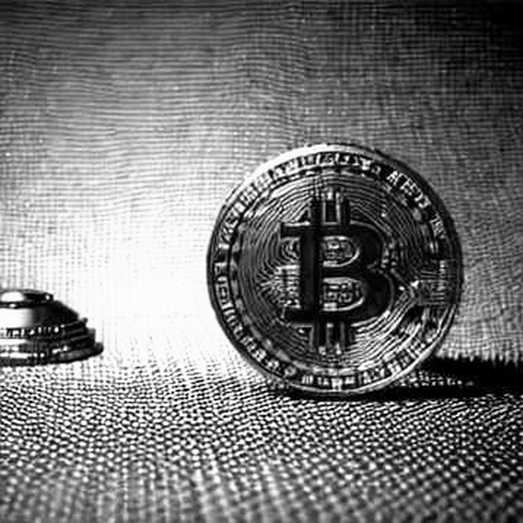
Value is consensus; truth is optional. The consensus today is that crypto is a macro asset. The truth is that its energy-dependent foundation makes it more vulnerable to supply shocks than any other asset class.

Check the hashrate, not the hype.